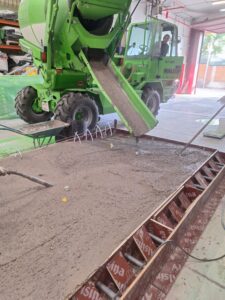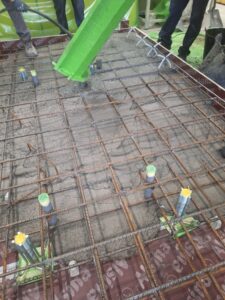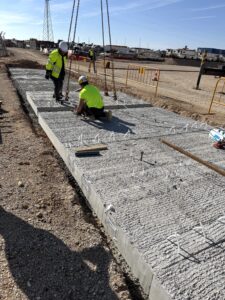
A new approach to road construction is taking shape thanks to a prototype pavement developed by ACCIONA using innovative geopolymer concrete. The system consists of precast slabs designed to replace traditional cement-based materials with a binder derived from industrial by-products such as fly ash and steel slag.
Through a chemical activation process, these materials form a cement-free concrete that significantly reduces environmental impact while maintaining the structural performance required for road infrastructure. By removing clinker from the mix, the solution achieves an estimated 78% reduction in CO₂ emissions compared to conventional cement-based concrete, as calculated in collaboration with the University of Minho.
The precast design also introduces practical advantages: modular slabs can simplify manufacturing, accelerate installation on site, and make future maintenance easier. At the end of their lifecycle, the elements can also support reuse and recycling strategies, contributing to more circular construction practices.
In addition to the sustainable material, the slabs integrate an innovative Weigh-In-Motion (WIM) monitoring system developed together with RINA. This technology allows real-time measurement of vehicle loads, providing valuable data to support smarter transport infrastructure management.
The new system will be tested on a access road to a production area of prefabricated elements in Toledo, Spain, where the prototype slabs have been installed in November 2025 and will be validated under real operating conditions. The pilot will help assess both the environmental benefits of the geopolymer concrete and the performance of the embedded monitoring technology in everyday traffic conditions.