Within the LIAISON project, researchers are designing a modern, digitalised, efficient transport infrastructure that reduces resource consumption and environmental impact through circular and low-carbon solutions.
To address these challenges, the innovative thermoelectric concrete solution transforms conventional cement-based materials into functional infrastructure elements that generate electricity via the Seebeck effect. By converting temperature gradients into low-power electrical energy, the material can act as a passive power source for embedded, self-powered sensing and monitoring systems.
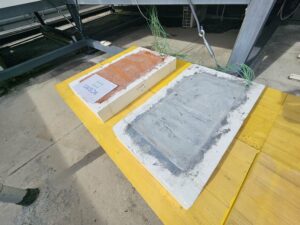
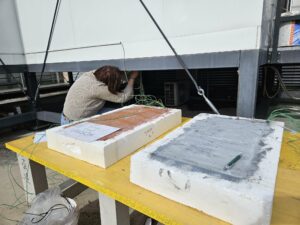
A major milestone has been reached in these days by our partners at the Slovenian National Building And Civil Engineering Institute: nine thermowires have now been successfully connected in cement-based thermoelectric generators (TEGs), one incorporating commercial graphite and the other red mud, along with a dedicated lead for voltage measurement and monitoring.
The system is now fully instrumented and capable of continuously measuring accumulated electrical energy as a function of the temperature difference between two embedded wire meshes positioned 80 mm apart at different heights within the concrete element. With real-environment monitoring underway, the team will soon be able to assess the effectiveness of the design and quantify its energy-harvesting performance.
By reducing dependence on external power supplies and enabling self-powered monitoring systems, thermoelectric concrete demonstrates how circular materials and functional design can converge to support smart, low-maintenance, and climate-aligned transport infrastructure.