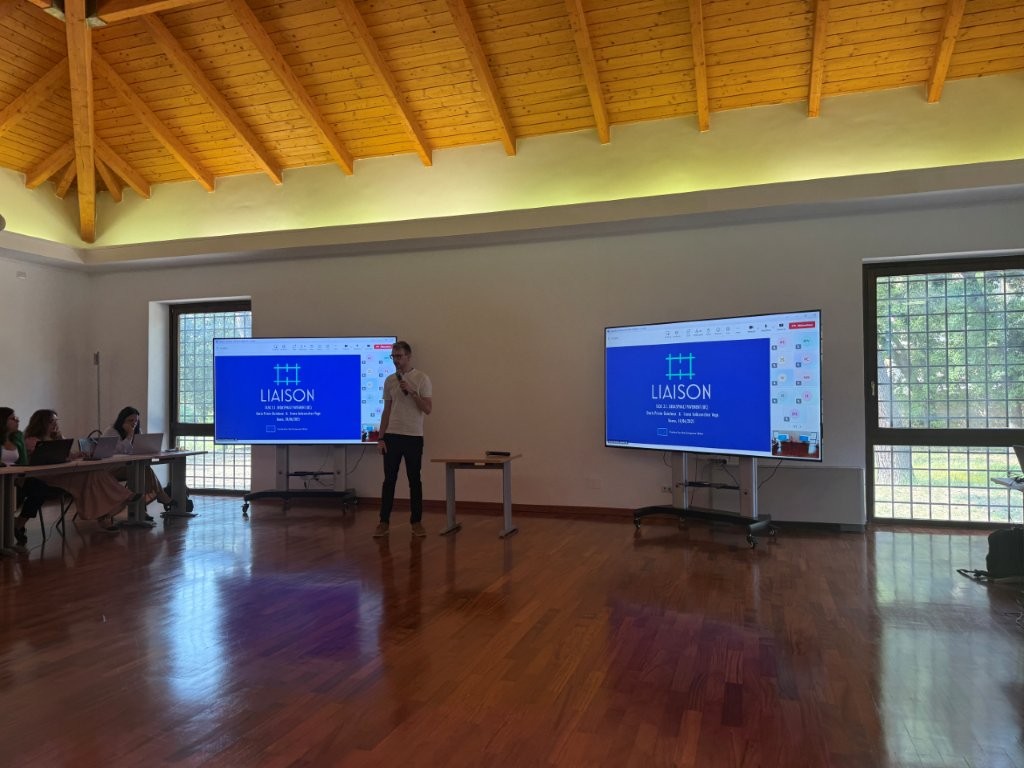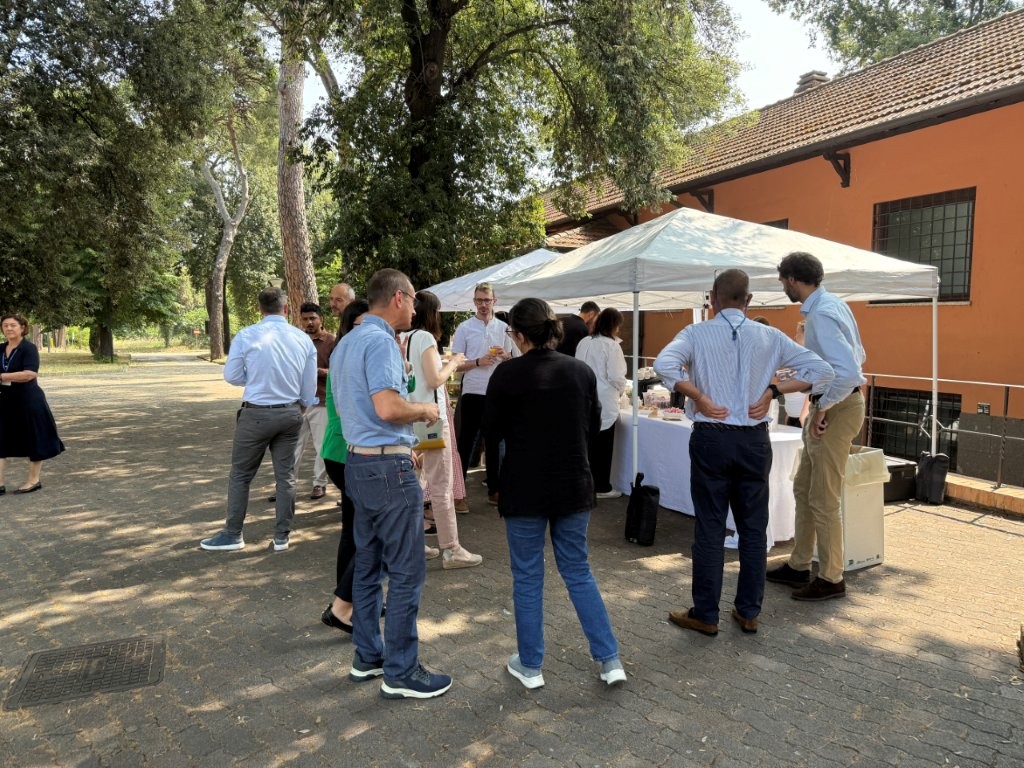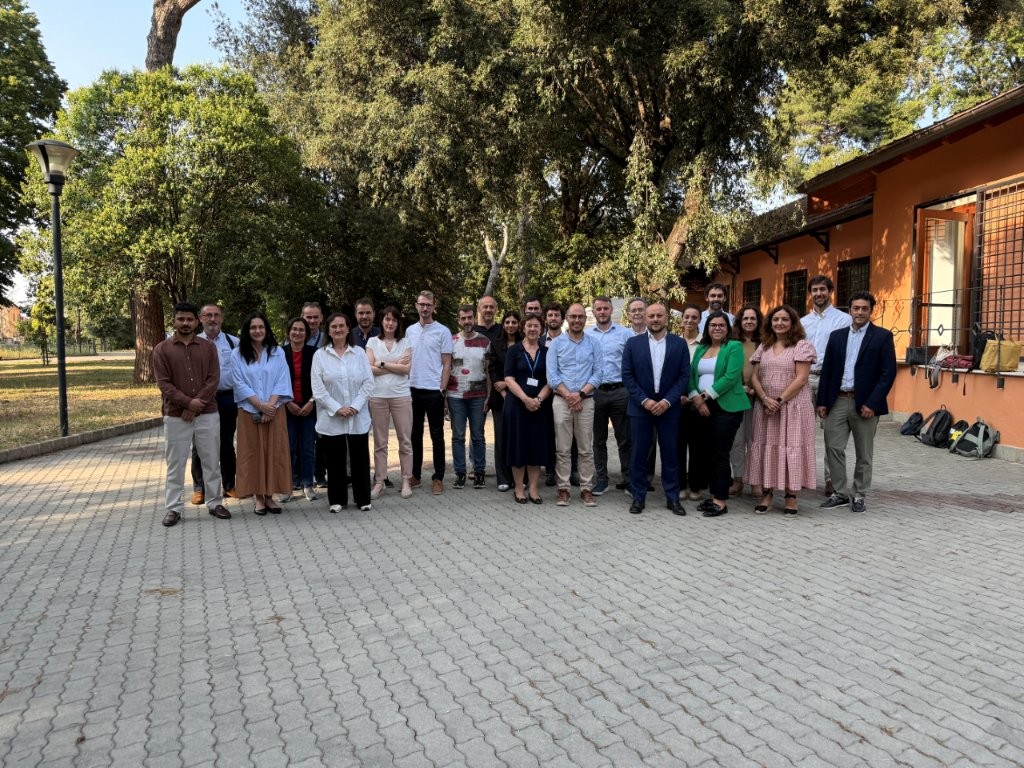
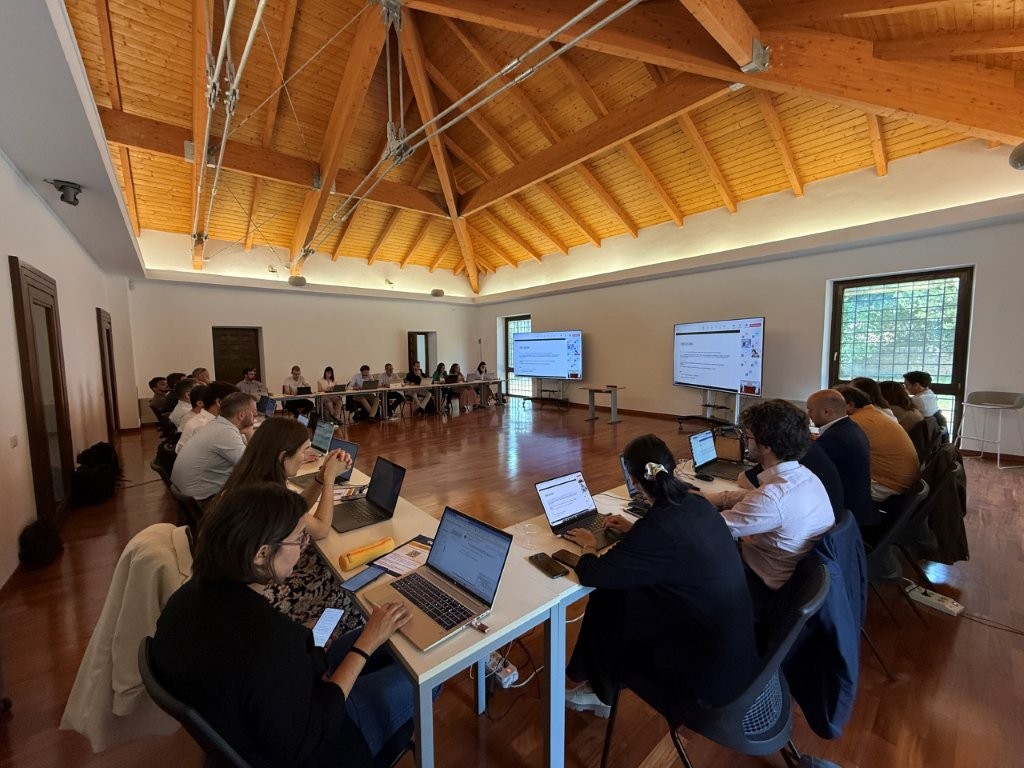
Earlier this month, the LIAISON consortium met in Rome for the project’s fourth General Assembly. Hosted by Autostrade per l’Italia at the Villa Fassini Training Center, the two-day meeting on 10–11 June brought together partners from across Europe to check in on progress, share updates from the field, and make sure everything stays on track in the project’s final year.
It was a packed agenda, covering everything from pilot site demos to digital tools and stakeholder engagement. Discussions were both technical and strategic, with a clear focus on how to make LIAISON’s innovations not only effective, but also practical and scalable in real transport networks.
One of the highlights was the update from the Slovenian demo site – dedicated to improved railway track ballast and thermoelectric generation in concrete elements; where mixtures using secondary raw materials—including red mud and graphite—are showing promising results in terms of performance for energy harvesting. These will be validated in a specially designed section of rail later this year. Progress on bio-asphalts was also shared, with durability and supply chains emerging as key considerations for scaling up.
The group also looked at smart structural components, including beams and slabs, and explored how monitoring systems could support better decision-making during infrastructure lifecycle management. Tests are ongoing, and final results are expected over the summer.
Another big topic was the project’s “Digital Toolbox” which includes several tools ranging from BIM and data traceability systems to a digital product passport. The team is working to ensure these are tested under real conditions and refined in time to support future procurement processes.
As project coordinator David Garcia Sanchez said: “It’s clear for us that if we want to improve, we want to measure – and we need to analyse data… to be sure that our solutions are improving what we’re looking for in terms of circularity, sustainability, and the reuse of materials – the Digital Toolbox which supports LIAISON’s new dynamic governance framework for multimodal transport infrastructure is key to this approach.”
Stakeholder involvement remains a strong focus for LIAISON. The latest workshop of the Stakeholder Reference Group provided valuable insights, and planning is already underway for the next one in November 2025. Meanwhile, an internal session helped partners identify and reflect on the project’s key exploitable results—those with real potential to be used by industry, authorities or researchers after the project ends.
Other updates included new results from tunnel ventilation and lighting tests, ongoing development of photovoltaic guardrails, and the evolution of a lightweight condition-monitoring tool that’s gaining interest among both public and private operators.
With implementation moving fast and real-world validation underway, LIAISON is well positioned to deliver practical solutions that support more resilient, efficient and sustainable transport systems across Europe.